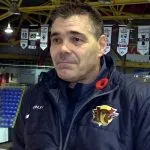
(Image Credit: RocketFAN)
How officials earn their Memorial Cup moment

Kevin Muench’s Mission: Developing the best

May 26, 2026 | 6:01 AM

The players get drafted.

The coaches get interviewed.

The officials often work in the background.

That is exactly where Kevin Muench is most comfortable.

For more than 25 years, the WHL’s Senior Director of Officiating and Facilities has helped identify, develop and mentor the men and women responsible for one of the most difficult jobs in hockey.

And during the Memorial Cup in Kelowna, Muench sees something most fans never do.

He sees the work.

Not just the work that happens during the game, but the years of preparation that allow an official to earn the opportunity to step onto the ice at junior hockey’s biggest event.

“The players work so hard to get there,” Muench said. “As officials, you work so hard to get there. You get some lucky bounces. You’ve got to go through some ups and some downs.”

Like players, officials spend years climbing the ladder. They battle for assignments, face scrutiny, deal with pressure and learn from mistakes.

And just like the athletes they oversee, only a select few make it all the way to the Memorial Cup.

“When you finally accomplish the opportunity to be there, it just feels so good,” Muench said. “But then it’s the next step, knowing that when you get there, that’s when the real work has to happen.”

Muench knows exactly what that feels like.

Before moving into league administration, he spent 12 seasons as a WHL referee. His own journey eventually led him to the 1995 Memorial Cup in Kamloops.

More than 30 years later, the memories remain vivid.

“It was great,” Muench recalled. “The atmosphere in Kamloops when the building is full. It’s just like here. It’s just a tremendous environment.”

He remembers the hockey.

He remembers the intensity.

Most of all, he remembers the people.

“We had a great crew of officials, some that are still my very best friends.

That experience shaped the way he views officiating today.

Muench understands better than most how difficult the job has become.

The game is faster than ever.

Players are bigger, stronger and more skilled.

Every game is televised. Every decision is replayed. Every call is analyzed.

At an event like the Memorial Cup, where four league champions and a host team are competing under enormous pressure, the challenge becomes even greater.

Officials must process the speed of the game, anticipate developing situations, manage emotions and apply the rules consistently, all in real time.

There are no second chances.

There are no slow-motion replays on the ice.

There is only judgment.

That is why Muench places such a premium on selecting the right people.

The process starts long before the Memorial Cup.

“We start the season with a lot of officials in the league, and as we go through the season, we have to pare down that number,” Muench explained.

By the time the playoffs arrive, only the league’s top performers remain under consideration.

“When we start the playoffs, we probably only use about 50 per cent of our referees and lines persons that get into the playoffs.”

Then the competition intensifies.

“Every round, we make reductions. The better you work, the more likely you are to be going on.”

Only after the WHL championship series concludes are Memorial Cup assignments finalized.

“We literally go right to the end of the playoffs till the final buzzer goes. Then we have our deliberations and discussions and confirm which officials are going to be selected to go.”

This year, the WHL is represented by referees Mike Campbell and Jeff Ingram.

For Ingram, it is his third Memorial Cup assignment.

For Campbell, it is his second.

Muench believes both have earned their place.

“They’re good communicators. They have good judgment. They’re good teammates.”

The qualities extend well beyond simply knowing the rule book.

“They get involved when they have to. They sit back when they don’t. They don’t overreact to physical play. They look after the goaltenders.”

Those traits become even more important at an event featuring the very best junior players in the country.

“If you want to compare the Memorial Cup to the Stanley Cup Finals, the Memorial Cup is the pinnacle of junior hockey,” Muench said.

At the Stanley Cup Final, the NHL sends its best officials.

The Memorial Cup operates the same way.

The WHL is also represented by three linespersons: Dustin Minty of Kelowna, Nick Albanetti of Vancouver and Brennan Walker of Vancouver.

Minty is working his second Memorial Cup while Albanetti and Walker are making their tournament debuts.

“It’s a tremendous accomplishment for those guys,” Muench said.

The success of the WHL officiating program stretches well beyond this tournament.

Muench proudly pointed to officials who have worked at the Olympics and the World Championship this season.

For him, it is proof that development works.

“Officiating is all about development.”

The comparison to players comes naturally.

“When teams bring in their 16-year-olds, they’ve got to learn the league. They’ve got to learn how to play. Same thing with young officials.”

Those officials arrive eager, nervous and inexperienced.

Years later, they become leaders.

“They come from those wide-eyed kids that are just stepping on the ice for the first time and then six, eight, ten years down the road, they are the veterans that are carrying the league.”

That growth does not happen by accident.

Muench credits a strong network of officiating coaches and mentors throughout the WHL.

“We’ve got a great crew of officiating coaches in the league.”

The focus is not just physical preparation.

“Good officials have to develop their head.”

Learning how to manage pressure may be the most important lesson of all.

Asked whether officials feel pressure at an event like the Memorial Cup, Muench didn’t hesitate.

“I think there’s healthy pressure and there’s negative pressure. Healthy pressure is a good thing.”

That pressure means officials care.

It means they are prepared.

It means they understand the responsibility that comes with working games of this magnitude.

Perhaps Muench summed up officiating best when asked whether fewer penalties automatically mean a better-called game.

“I think the way to put it is they call the right penalties.”

Some games require more intervention.

Others require less.

The key is understanding what the game needs.

“A good official only gets involved in the game when the game needs him.”

Simple words.

But they reflect decades of experience.

As thousands of fans fill Prospera Place during the Memorial Cup, their attention naturally follows the stars, the goals and the championship race.

Yet every great game also depends on the people in stripes.

People who have spent years preparing for this stage.

People who are asked to make split-second decisions in a game played at extraordinary speed.

And people like Kevin Muench, who have dedicated much of their lives to making sure the very best officials are ready when the puck drops

Comments

Leave a Reply