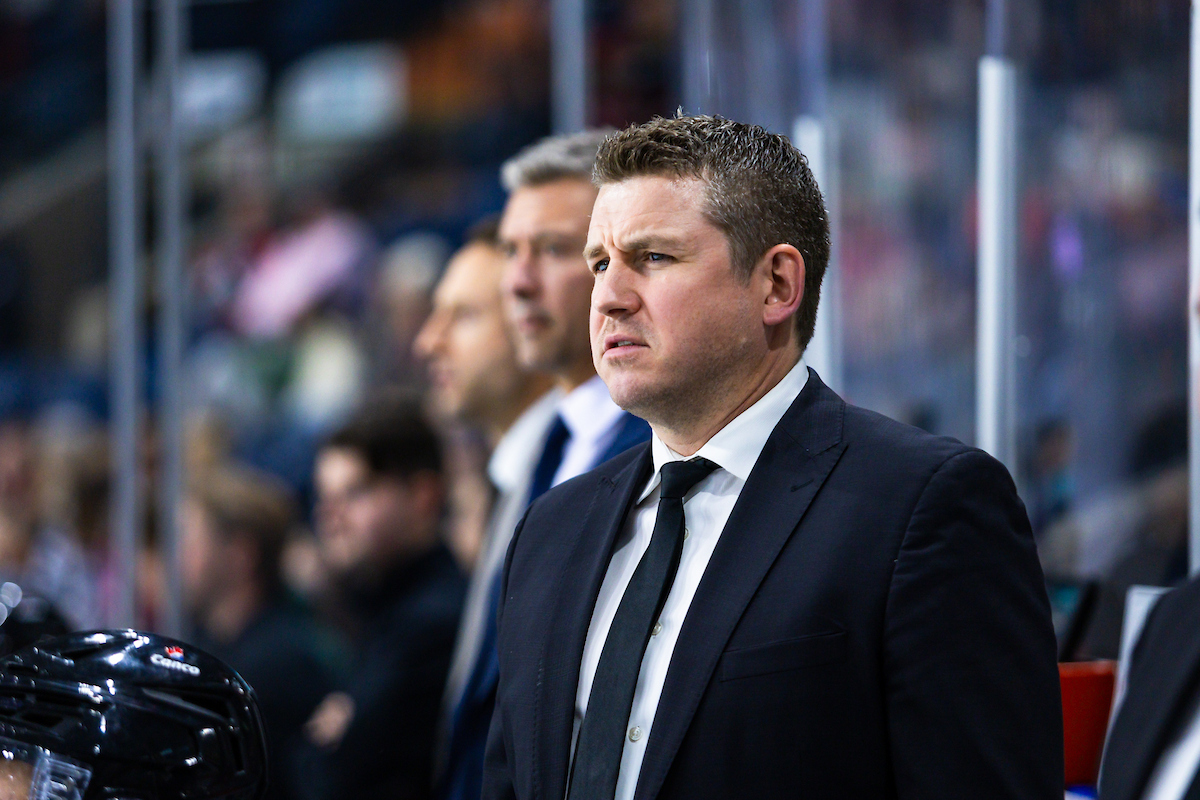
Head Coach Derrick Martin (Image Credit: Steve Dunsmoor)
Player driven growth

When the players start delivering the message

Oct 1, 2026 | 7:00 AM

A hockey team can spend hours in meetings.

Coaches can draw up systems on whiteboards, stop practice to correct mistakes and explain the same details over and over again.

Eventually, though, there comes a point when the coach doesn’t have to say everything.

The players start saying it for him.

That is an important stage of development for the Kelowna Rockets, who are working through the early stages of a season with a roster that blends veterans with a large group of young players still learning what the Western Hockey League demands.

Head coach Derrick Martin is already seeing signs that the message is beginning to move from the coaching staff into the dressing room.

“I think it’s important that you learn first and then once you learn, then you can teach, and you’re expected to teach here,” Martin said.

That process is already happening with some of the Rockets’ older rookie players.

Martin pointed to Dane Sorenson and Cole Braunshausen as two players whose voices are becoming more noticeable around the team.

“Dane Sorenson has played junior hockey before, and he’s done a really good job. He’s been here a month now; I think we’re approaching five weeks together. We’re starting to hear his voice pop up more. We’re starting to see him talk on the bench more, and we want that,” Martin said.

“He’s a pretty stoic individual. He takes what he does seriously, but at the same time, I think he’s a really aware human being. He knows when to push guys and when to back off of guys already.”

Martin sees something similar in Braunshausen.

“He’s a stoic guy, but he goes about his business the right way,” Martin said.

For the younger players, the adjustment is different.

Many are still trying to earn their way into the lineup while learning the pace and physical demands of the WHL.

“I don’t necessarily hear a lot from them. It’s a lot more feedback one way right now,” Martin said.

“But at the same time, our young guys are a very, very hockey IQ savvy group and there’s certain things that they catch on to really quickly and in other areas where they need a little bit more coaxing and a little more teaching.”

The WHL experience itself is part of that education.

“I don’t think people understand how physical our league is until they get in it or how hard our league is until you sit up close and personal to it and get a chance to feel it,” Martin said.

Martin has seen that progression before with players who entered the league with him and are now in their third season.

“Rowan Guest was that way, and Owen Folstrom was that way, and Jacob Henderson was that way,” Martin said.

“They came into the league with me at the same time. We’ve been together now into our third season, and they’re saying a lot of the things before I need to say it. And they’re delivering that message.”

Ultimately, that is what Martin wants.

“Ultimately, you want the crown to be on the players’ heads and you want them to be the ones that are driving that messaging,” he said.

The Rockets have needed players to step into bigger leadership roles this season after losing some important voices from last year’s team.

When veteran defenceman Nate Corbet was away at NHL camp, Martin wondered who would help replace some of that energy.

“It was one concern when Nate left for his NHL camp because he’s a loud, rambunctious guy and he really brings the energy as to who is gonna make up for that,” Martin said.

“And you lose a guy like Connor Pankratz who’s been a real glue guy for our dressing room and a real player that guys have found a way to rally around over the last couple of seasons.”

The answer, Martin says, has come from within.

“Other guys have taken over that and probably had to do that uncomfortably,” he said.

The veteran group has also embraced its responsibility to help the younger players.

“I’m really fortunate this year, we’ve got a really good veteran group that wants to learn, and they’re fantastic teachers, and inside the dressing room, they’re taking care of things and doing a really, really great job of that,” Martin said.

For Martin, the sound of the room is an important indicator of where his team is at.

“A quiet dressing room or a quiet bench or a quiet practice is losing practices or losing benches,” he said. “We don’t have that problem.”

There is still plenty of teaching ahead, but Martin is seeing the players begin to take ownership of the message.

“On the other side of uncomfortable is growth, and I think we’ve seen a lot of guys buy into that messaging,” Martin said.

The goal is to eventually have the players driving that message themselves.

“And that’s when this stuff all really starts to click and starts to get going, and I’m starting to see that this season,” he said.

Comments

Leave a Reply